
Ink Inconsistencies
How the Desire for Legibility Can Look like a Change of Hand in The Water Doctrine (Voynich Manuscript)

As I have argued, The Water Doctrine (the Voynich Manuscript) likely had two central scribes, possibly one singular scribe and possibly up to four. As we see, there is large variability in each character (or “glyph’s”) consistency across different sections and even within a single folio, paragraph and even line. This is in part due to the nature/style of the script and speed of the scribe, but also in part, due to articulation of sound and intentional subtle contractions (see examples in my lexicon and lessons) as I also argue, this is a largely phonetically oriented (and Irish oriented) script.
Below we have two examples of where pigment of ink is possibly mentioned depicting scarcity in real time. I talk in more detail about 105r and 57v here and here.
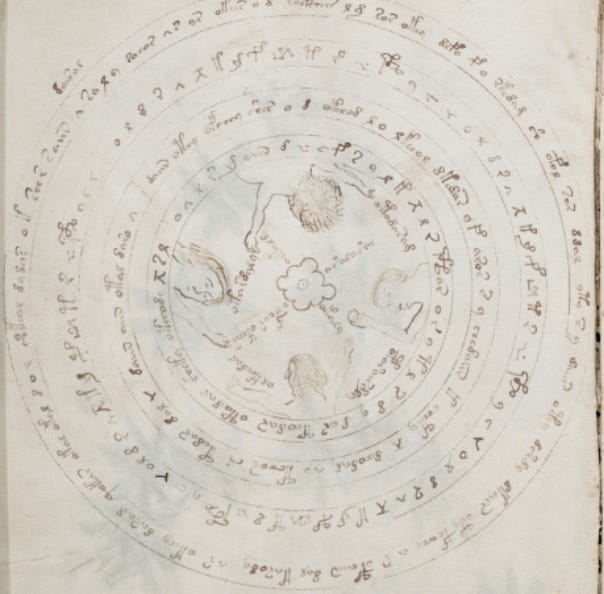
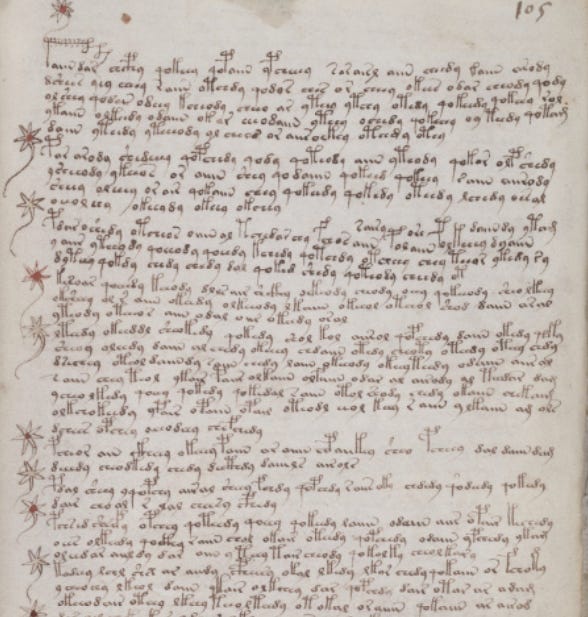
Inconsistent pigment availability or irregular saturation:
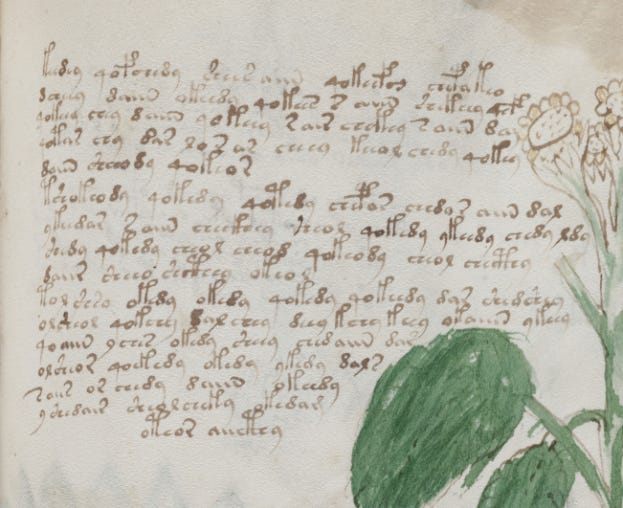
We see similar scarcity and/or irregularities in ink pigment to water ratio (or less likely, tracing over later on) occur above on 31r and below on115r. Note that Lisa Fagin Davis in her publication in which she admittedly uses a substantial amount of an AI called Archetype (please keep in mind that all AI are known to output hallucinations and cannot/should not be relied upon), she claims there to be a total of 5 scribes and she writes, definitively: “The entire Quire (18) is written by Scribe 3 with the exception of folio 115r, where the first twelve lines were written by Scribe 2”
Let’s look at 115r…
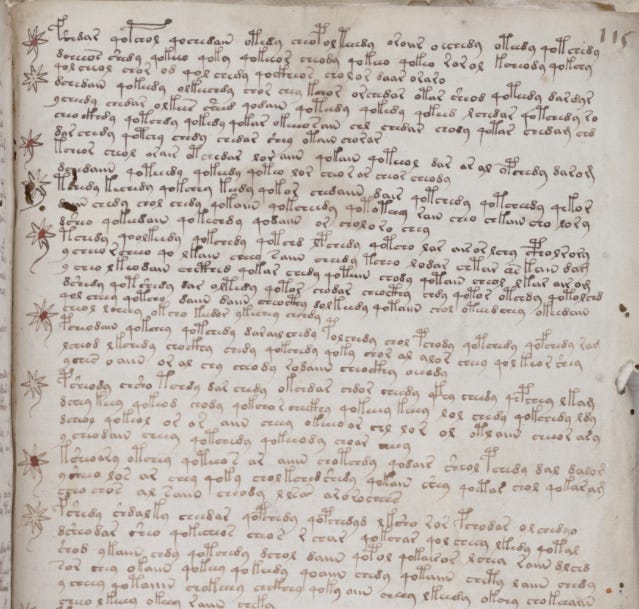
When writing a private diary, a person may stay entirely consistent in writing, speed and spacing when pigment in ink is low since they’re the only one to read it. This manuscript, however, is not a diary. The scribes were very concerned about legibility and clarity. The scribes were concerned about their readers. We can see this abundantly throughout the text, in corrections/edits, overwriting(105r, 2v), coverlet notes/marginalia and in the word choices from several of my layered translations. A scribe, noticing any pigment loss in the ink as they’re writing, we see them possibly adjust their spacing and articulation in real time, throughout the manuscript. We see what appears to be a deliberate and immediate correction of hand. Above in 115r, I’d argue this is the same scribe, merely a scribe slightly more concerned about legibility by line 14 and onward, adjusting their stance and perhaps even making quill adjustments.
You be the judge. According to her publication, Lisa Fagin Davis adamantly believes that these two images I’ve pulled from 115r below are separate hands:
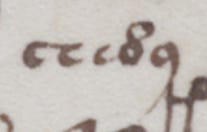
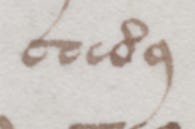
My examination and understanding is in part from being successful in translation but also from spending nearly two years of heavily engaging with how the text is physically written, using my own hands to actively write in the script. This is NOT something AI can do or reproduce. This is a reminder that environmentally destructive tools like AI do not belong in The Water Doctrine (Voynich Manuscript) and a reminder of the importance in challenging academic claims, even the “experts”, especially if they’re producing possible hallucinations as facts, or in this case, scribes. A strong reminder that we do not know how heavily anyone, academics and hobbyists alike, rely on AI if their work is behind closed doors and they are known to default to “trust me, bro” antics:
.
.
Thank you to all the real ones for your continued support and interest in this strange work. Thank you for making me feel comfortable letting my work exist so transparently. Let’s continue to keep AI out of The Water Doctrine (Voynich Manuscript). Be blesst <3
I would caution against anyone ever relying upon AI evidence of any sort. Since seeing Grok get re-programmed as a Holocaust Denier, we have indisputable proof that AI can be manipulated to represent less factual truth and more political leanings or someone’s programmed agenda. It simply cannot be trusted.